

Smoke Alarm Installation in Perth: What Every Homeowner and Landlord Needs to Know
Every year, house fires claim lives and destroy homes across Western Australia. The single most effective tool for reducing the risk of death in a residential fire is also one of the most straightforward: a working smoke alarm. Yet despite being a legal requirement in every occupied dwelling in WA, smoke alarms remain one of the most neglected safety items in Australian homes. Batteries go flat, units expire past their ten-year lifespan, and alarms get installed in the wrong locations — all of which can render them useless in the moment they matter most.
Whether you're a homeowner wanting to make sure your family is protected, a landlord trying to meet your legal obligations, or a property manager overseeing a portfolio of rental properties, understanding the requirements around smoke alarm installation in Perth is not optional — it's a fundamental part of owning or managing residential property in Western Australia.
This guide covers everything you need to know: the legal requirements, the types of alarms available, where they need to be installed, when smoke alarm replacement is required, and why professional installation is always the right call.
The Legal Landscape: Smoke Alarm Requirements in Western Australia
Smoke alarm legislation in Western Australia is governed by the Building Act 2011 and associated regulations, as well as the Residential Tenancies Act 1987 for rental properties. The requirements have been updated over recent years, and many homeowners and landlords are working from outdated information.
Requirements for Owner-Occupied Homes
All residential dwellings in Western Australia are required to have functioning smoke alarms installed. For homes built or significantly renovated after 1 July 1997, hardwired interconnected smoke alarms are required. Older homes may have battery-operated alarms, but these must still meet Australian Standard AS 3786 and be positioned correctly throughout the dwelling.
The key thing many homeowners don't realise is that smoke alarms have a defined lifespan. Under Australian Standard AS 3786, smoke alarms must be replaced within ten years of their manufacture date — not installation date. If you're unsure how old the alarms in your home are, check the date stamp on the back of the unit. If it's more than ten years ago, those alarms need to go, regardless of whether they still respond to a test button press.
Requirements for Rental Properties
Landlords in Western Australia have specific obligations under the Residential Tenancies (Smoke Alarms) Regulations 2015. These regulations require that:
- Every rental property must have functioning smoke alarms installed before a new tenancy begins
- Smoke alarms must comply with AS 3786 and be within their ten-year service life
- It is the landlord's responsibility — not the tenant's — to ensure alarms are installed, functioning, and replaced when required
- Tenants are responsible for replacing batteries in battery-operated alarms during the tenancy, but the landlord must ensure the alarms are in working order at the start of the lease
- Landlords who fail to comply with smoke alarm requirements face significant fines under WA tenancy legislation
For property managers overseeing rental portfolios, maintaining a documented smoke alarm compliance schedule for each property is not just good practice — it's essential risk management. A fire at a rental property where smoke alarms were non-compliant exposes the landlord and property manager to serious legal and financial liability.
Types of Smoke Alarms: Choosing the Right Technology
Not all smoke alarms work the same way, and understanding the differences helps you make an informed decision about what's right for your property.
Ionisation Smoke Alarms
Ionisation alarms use a small amount of radioactive material to ionise air in a detection chamber. When smoke particles enter the chamber, they disrupt the ionisation process and trigger the alarm. These units are generally better at detecting fast-flaming fires — the kind that spread quickly with an open flame.
Photoelectric Smoke Alarms
Photoelectric alarms use a light source and a sensor. When smoke particles enter the chamber, they scatter the light beam and trigger the alarm. These units are generally more responsive to slow, smouldering fires — the type most commonly involved in residential fire deaths, as they often start during the night when occupants are asleep.
In 2022, Standards Australia updated AS 3786 to specify that new smoke alarms installed in residential properties should be photoelectric type. This reflects the weight of evidence that photoelectric alarms provide more reliable early warning in the fire scenarios most likely to cause fatalities in homes. Western Australia's Building Commission has aligned with this direction, and photoelectric alarms are now the recommended standard for residential installation.
Hardwired vs. Battery-Operated
Hardwired smoke alarms are connected to the property's mains electrical supply and typically include a battery backup in case of power outage. They can also be interconnected — meaning when one alarm detects smoke, all alarms in the property sound simultaneously. This interconnection is a critical safety feature in larger homes or multi-storey properties where an alarm in one part of the house might not be audible in a remote bedroom.
Battery-operated alarms are simpler and do not require an electrician for installation in most cases, but they rely entirely on the battery remaining charged and functional. Sealed long-life lithium battery alarms — which are designed to last the full ten-year service life of the unit — have become a popular and practical option for properties where hardwiring is not practicable.
Where Should Smoke Alarms Be Installed?
Location is just as important as the type of alarm. An alarm installed in the wrong position — too close to a kitchen, in a poorly ventilated space, or too far from sleeping areas — will either fail to detect a fire in time or generate so many false alarms that occupants disable it.
The Australian Building Codes Board and AS 3786 provide specific guidance on smoke alarm placement. For residential properties in Western Australia, the general requirements are:
- On every storey of the dwelling
- In every corridor or hallway associated with a bedroom — or, if there is no corridor, between the sleeping areas and the rest of the dwelling
- In any storey that does not contain a bedroom, on the most likely path of travel to exit the building
In addition to the mandatory locations, best practice recommends installing alarms in living areas and open-plan kitchen/living spaces — positioned at least 300mm from walls and light fittings, and at least 300mm from air conditioning vents or fans that could interfere with smoke detection.
Smoke alarms should never be installed in bathrooms, garages, or directly adjacent to cooking appliances, as these locations are prone to false alarms from steam or cooking fumes, which leads occupants to remove batteries or disable the alarm entirely.
When Is Smoke Alarm Replacement Required?
Understanding when alarms need to be replaced is one of the areas where homeowners and landlords most commonly fall short of compliance — and it's an area with genuine safety implications.
Age-Based Replacement
As noted earlier, smoke alarms must be replaced within ten years of their manufacture date. The manufacture date is printed on the back of the unit. It's not unusual for property owners to discover during a compliance check that their alarms are twelve or fifteen years old — and in some cases, considerably older. These units need immediate replacement, full stop.
After Activation in a Fire
Any smoke alarm that has been activated in an actual fire — as opposed to a test or nuisance activation — should be replaced. Heat and smoke exposure can degrade the internal components of the unit, compromising its future reliability.
After Any Damage
Physical damage, water ingress, or evidence of insect infestation inside the unit are all grounds for immediate replacement. Insects are actually a surprisingly common cause of smoke alarm failure — small insects entering the detection chamber can both cause false alarms and physically obstruct the sensor, reducing sensitivity.
When Moving Into a Property
If you've recently purchased a property, one of the first things you should do is check the manufacture date on every smoke alarm in the dwelling. Previous owners may not have maintained the alarms, and inheriting expired or non-compliant units is more common than you'd expect. A professional smoke alarm replacement service will assess every unit in the property, confirm compliance, and replace any alarms that don't meet current requirements.
DIY vs. Licensed Electrician: What the Law Requires
This is a question that comes up frequently, and the answer in Western Australia is fairly clear. Battery-operated smoke alarms can generally be installed or replaced by a homeowner without an electrician — provided the unit meets Australian Standard AS 3786 and is installed in the correct locations.
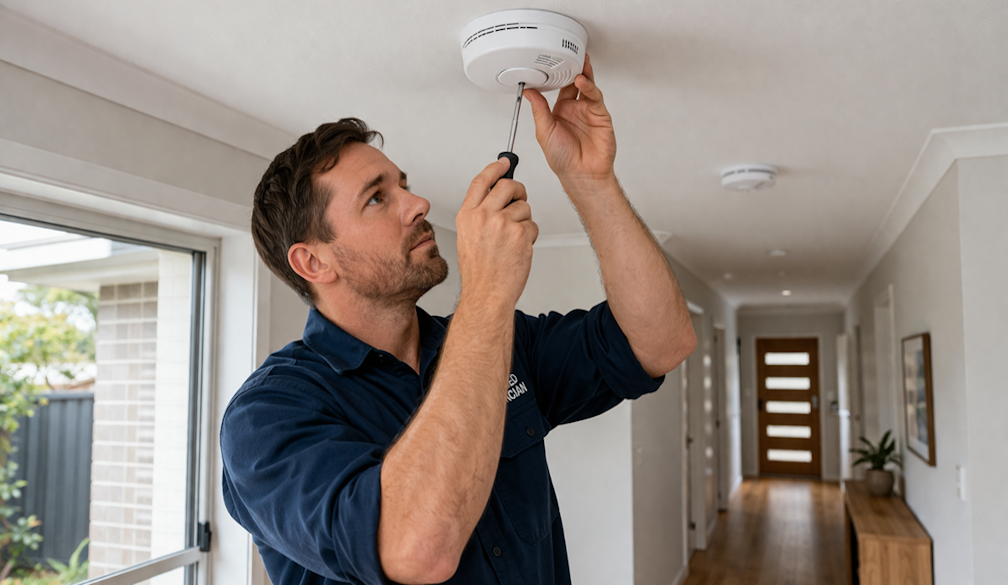
However, hardwired smoke alarms are a different matter entirely. Any work involving the mains electrical wiring of a property — including installing, replacing, or interconnecting hardwired smoke alarms — must be carried out by a licensed electrician. This is not a grey area. Unlicensed electrical work in Western Australia is illegal under the Electricity (Licensing) Regulations 1991, and the consequences extend beyond fines: unlicensed electrical work can void your home and contents insurance and create significant liability in the event of a fire.
For landlords and property managers, using a licensed electrician for smoke alarm installation and replacement also provides documented evidence of compliance, which is invaluable if a tenancy dispute or insurance claim ever requires you to demonstrate that alarms were properly maintained.
A Practical Guide for Property Managers: Staying on Top of Compliance
For property managers overseeing multiple rental properties, smoke alarm compliance can feel like a moving target — especially as alarms across a portfolio reach the end of their service lives at different times. Here's a practical framework for staying on top of it:
- Audit every property in your portfolio and record the manufacture date of each smoke alarm — create a compliance register with scheduled replacement dates
- Build smoke alarm compliance checks into your routine property inspection process — at least annually and at every change of tenancy
- Engage a licensed electrician for all hardwired alarm replacements and keep copies of compliance certificates on file for each property
- At the start of every new tenancy, confirm in writing that all smoke alarms are functioning, compliant, and within their service life — include this in the property condition report
- Respond promptly to any tenant report of a faulty or chirping alarm — a persistent low-battery chirp often leads tenants to remove batteries, which creates an immediate compliance and safety issue
- Review legislative updates periodically — WA smoke alarm requirements have evolved over recent years and may continue to do so
The True Cost of Non-Compliance
It's tempting to think of smoke alarm compliance as a bureaucratic box-ticking exercise. The reality is very different. Smoke alarms are one of the few pieces of safety equipment in a home that can genuinely mean the difference between life and death — and the statistics bear this out.
According to Fire and Emergency Services WA, the majority of fatal house fires involve properties where smoke alarms were either absent, not functioning, or had been deliberately disabled. The minutes of warning a working alarm provides can mean the difference between safe evacuation and tragedy.
For landlords and property managers, the legal consequences of non-compliance are significant. Beyond the fines available under tenancy legislation, a fire at a non-compliant rental property can result in civil litigation, insurance disputes, and reputational damage that far exceeds the cost of maintaining proper alarm compliance.
The investment required to keep smoke alarms compliant across a rental property — or to upgrade the alarms in your own home — is genuinely modest compared to what's at stake. Professional installation by a licensed electrician provides peace of mind, legal protection, and the confidence that the people in the property are properly protected.
Final Thoughts: Don't Leave It to Chance
Smoke alarms are not a set-and-forget item. They have a defined service life, specific placement requirements, and legal obligations attached to them — and in Western Australia, those obligations have teeth. Whether you're a homeowner, a landlord with a single investment property, or a property manager with dozens of dwellings under management, staying on top of smoke alarm compliance is a non-negotiable part of responsible property ownership.
If you're unsure whether the alarms in your property meet current Western Australian requirements — or if it's simply been a while since anyone checked — the most sensible step is to engage a licensed electrician for a compliance assessment. A thorough smoke alarm installation and replacement service carried out by a qualified professional will confirm your compliance status, replace any non-compliant units, and give you documented evidence that your property meets its legal obligations.
It's a small investment for an enormous peace of mind — and it could be the most important safety decision you make for your property this year.


