

Timber Walls: How to Use Timber Panelling to Transform Any Interior Space
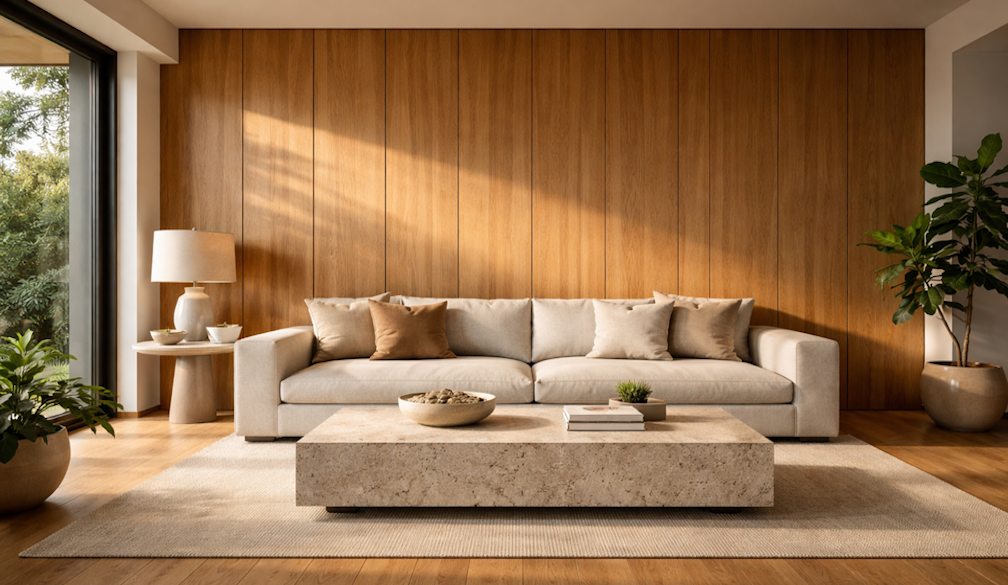
Walk into a room with a timber wall and you feel it before you consciously register it. There is a warmth to the space, a sense of depth and texture — that painted plasterboard simply cannot replicate. Timber has been used to line interior walls for centuries across almost every culture and climate, and the reasons haven't changed: it is beautiful, tactile, acoustically rich, and uniquely capable of making a space feel both considered and liveable at the same time.
In Australian homes and commercial interiors, timber walls are experiencing a genuine, significant comeback not as a nostalgic callback to the wood-panelled studies of the 1970s, but as a sophisticated design element embraced by some of the country's most accomplished architects and interior designers. Contemporary timber wall treatments are a world away from their predecessors: refined, beautifully detailed, available in species and profiles that suit every aesthetic from raw and industrial to calm and luxurious.
Whether you're planning a whole-room transformation, a single feature wall that anchors the space, or a commercial installation that needs to perform as well as it looks, this guide covers everything you need to know from species and profile selection to installation considerations, acoustic performance, and design principles that make timber wall treatments genuinely outstanding.
Why Timber Remains One of Interior Design's Most Enduring Materials
The appeal of timber as an interior wall material is not simply aesthetic, though the aesthetic case is compelling on its own. Timber brings a set of qualities to an interior that manufactured materials struggle to match, and understanding those qualities helps explain why it continues to be chosen by designers and homeowners who want spaces that feel genuinely special.
Biophilic Connection
Research in environmental psychology consistently demonstrates that human beings respond positively to natural materials in their environment, a phenomenon described as biophilia, our innate connection to the natural world. Timber, with its organic variation in grain, colour, and texture, activates this response in a way that synthetic materials don't. Spaces that incorporate natural timber consistently rate more highly in occupant wellbeing studies than equivalent spaces finished entirely in manufactured materials.
For homeowners, this translates to rooms that simply feel better to spend time in, calmer, more comfortable, more restorative. For commercial designers specifying hospitality, retail, or workplace environments, the biophilic quality of timber wall treatments is increasingly recognised as a meaningful contributor to customer and staff experience.
Acoustic Performance
Timber wall panels contribute meaningfully to the acoustic quality of a space. Hard, flat surfaces, such as plasterboard, glass, and polished concrete, create reflective acoustic environments that amplify sound and increase reverberation time, resulting in spaces that feel loud and fatiguing. Timber's surface texture and the air gaps inherent in most timber panelling systems scatter and absorb sound energy, reducing reverberation and creating a more comfortable acoustic environment.
In open-plan living areas, home offices, restaurants, and commercial spaces where acoustic quality affects the usability and enjoyment of the space, timber wall treatments offer a design-integrated solution to acoustic management that doesn't require the clinical appearance of dedicated acoustic panels.
Thermal Mass and Insulation
Timber has natural insulating properties that contribute to a wall's thermal performance. While the R-value of a timber feature wall panel is not dramatic in isolation, timber's capacity to moderate surface temperature, remaining comfortable to the touch in both warm and cool conditions, contributes to the perceived warmth and comfort of a space in a way that cold, hard surfaces do not.
Character That Develops Over Time
Unlike painted walls that look best when freshly done and gradually show wear, quality timber walls age with grace. The patina that develops on timber surfaces over years of use, subtle darkening, the softening of grain contrasts, and the warm lustre of a well-maintained finish add to the character of the material rather than detracting from it. Timber walls are an investment that improves with age, not a finish that needs to be periodically renewed to maintain their appearance.
Timber Species: Choosing the Right Timber for Your Wall
The species of timber used in a wall treatment is one of the most fundamental specification decisions, as it determines the colour palette, grain character, hardness, and overall aesthetic personality of the installation. Australian and imported timbers offer a wide range of options to suit different design intentions.
Australian Hardwoods
Australia's native hardwoods, spotted gum, blackbutt, ironbark, tallowwood, messmate, and many others, offer some of the most distinctive and characterful timber available anywhere in the world. Their grain patterns are often complex and dramatic, their colour ranges span from pale straw through rich honey to deep chocolate brown, and their association with the Australian landscape gives them an authenticity that resonates particularly strongly in Australian interiors.
Australian hardwoods are typically dense and hard, which makes them durable for wall applications but also means they require sharp tooling and careful installation technique. Their natural oils and extractives can affect adhesive and finish compatibility, so product selection and installation method should account for the specific species being used.
American and European Species
American oak, American walnut, European oak, and European ash are among the most widely used imported species in Australian interior design. American oak offers a relatively fine, consistent grain with a warm golden-blonde tone that suits contemporary and transitional interiors. American walnut brings rich chocolate-brown tones and a fine, straight grain that reads as quietly luxurious. European oak offers similar qualities to American oak with a slightly more complex grain character and a warmer, more amber tone in certain cuts.
These species are well understood by furniture and joinery makers, are available in a wide range of dimensions and profiles, and are compatible with a broad range of finishes and treatment systems. For designers working across residential and commercial projects with diverse aesthetic briefs, they offer reliable and highly versatile options.
Engineered Timber Panels
Engineered timber wall panels, where a thin veneer of real timber is bonded to a stable substrate such as MDF or plywood, offer the aesthetic of solid timber with improved dimensional stability and reduced susceptibility to the checking and movement that can affect solid timber in variable humidity environments like heated or air-conditioned spaces. They are also more resource-efficient, making better use of premium timber through thin-sliced veneers rather than requiring solid boards throughout.
For large commercial installations, or in any situation where the timber will be subject to significant temperature and humidity variation, engineered panels are often the more practical specification, delivering the visual result of solid timber with better performance and more consistent appearance across large areas.
Designing with Timber Feature Wall Panels: Principles That Work
Understanding how to use timber wall treatments effectively in a design — rather than simply applying them as a surface decoration — is what separates installations that are genuinely outstanding from those that feel like an afterthought. These design principles consistently produce the best outcomes.
Commit to One Wall — or All of Them
The most common mistake with feature wall treatments is timidity, applying timber to part of a wall, or treating it as a thin band rather than a full floor-to-ceiling installation. Timber feature walls work best when they are given full commitment: floor to ceiling, wall to wall, with no awkward partial applications that make the wall treatment feel like it ran out of budget halfway through.
Alternatively, wrapping timber panelling across multiple walls and even the ceiling of a space creates an immersive, enveloping quality, a room within a room, that is profoundly different in character from a single feature wall and can be extraordinarily effective in the right context.
Integrate with Architecture
The most successful timber feature wall panels installations feel like they belong to the architecture rather than being applied to it. Aligning horizontal panel joints with window sill heights, door head heights, or other architectural datums creates a sense of order and intention. Running panels continuously across doorways and into adjacent spaces creates spatial flow. Coordinating the timber species or finish with flooring, joinery, or furniture creates a cohesive material narrative across the whole interior.
Consider the Light
Timber wall treatments are highly responsive to light, both the direction and quality of natural light falling across the surface, and the artificial lighting used to illuminate the wall after dark. Raking light from a nearby window reveals the texture of the grain and the depth of the panel profile in a way that flat frontal light does not. Deliberate artificial lighting, wall washers, directional spots, or concealed linear lighting can be used to create dramatic effects that transform the wall's character between day and night.
Installation Considerations: What to Discuss with Your Builder or Installer
Timber wall panelling is a skilled installation that requires careful planning and execution. These are the key practical considerations to address before work begins:
- Acclimatisation: Timber boards should be acclimatised to the humidity conditions of the installation space before fixing, typically for a minimum of one to two weeks. Installing boards that haven't acclimatised can result in significant movement after installation, as the timber adjusts to its environment
- Substrate preparation: The wall substrate must be flat, plumb, and dry before installation. Timber panels will telegraph any irregularity in the substrate surface, so careful preparation is essential for a clean result
- Fixing method: Secret fixing systems that conceal fixings within the board profile produce the cleanest visual result and are strongly preferred for quality installations. Face fixing with visible nails or screws can look acceptable in some rustic styles, but generally reduces the perceived quality of the installation
- Moisture barrier: In bathrooms, laundries, or any location with elevated moisture exposure, a suitable moisture barrier behind the panelling is essential to prevent moisture from reaching the substrate and causing the boards to cup or warp
- Expansion gaps: Timber moves with changes in humidity, and the installation must accommodate that movement through appropriate expansion gaps at borders, around penetrations, and between boards, depending on the profile
- End detailing: How the panelling terminates at walls, ceilings, floors, and around openings significantly affects the perceived quality of the installation. Spend time detailing these junctions carefully; they make a disproportionate difference to the overall result
Timber Walls in Commercial Spaces: The Hospitality and Retail Case
Beyond the residential context, timber wall treatments are a staple of high-quality hospitality, retail, and workplace interiors across Australia. Restaurants, hotels, bars, boutiques, and offices all use timber wall panelling to create environments that communicate quality, warmth, and considered design to customers and staff.
In hospitality environments, timber walls contribute to the acoustic comfort of the dining experience, create visual warmth that makes guests feel welcome and relaxed, and develop a patina over years of use that gives successful venues their sense of history and character. In retail environments, timber feature walls create visual anchors that direct attention and communicate quality by association. In workplace settings, timber panelling in meeting rooms, reception areas, and breakout spaces contributes to the brand expression of the organisation and to the well-being of the people who work there every day.
For commercial projects, the specification of timber wall products needs to account for relevant fire rating requirements, commercial-grade durability, and the cleaning and maintenance regime of the specific environment. Working with a supplier who has experience in commercial timber wall applications and can provide the technical documentation needed for development applications and building certification is important for project managers and architects working in the commercial sector.
Final Thoughts: A Material Worth Investing In
Timber walls are one of those design decisions that people rarely regret. In a world of increasingly homogeneous interiors, the same white walls, the same grey floors, the same specification choices repeated endlessly, a beautifully executed timber wall treatment announces that the people who created the space cared about it. It adds warmth, texture, acoustic quality, and a connection to the natural world that transforms rooms from spaces you move through into spaces you want to spend time in.
Whether you're drawn to the drama of floor-to-ceiling Australian hardwood, the refined simplicity of white-oiled European oak slats, or the contemporary energy of a dark-stained batten wall, the range of options available in the Australian market today is extraordinary. The investment in quality materials and skilled installation, done well, is one that rewards you every day for the life of the building.


