

BoxBrownie.com bringing construction plans to life with CGI renders
- Written by Diane Falzon
In an Australian industry first, image marketing technology specialists, BoxBrownie.com, has launched its latest innovative cloud-based system offering – creating stunningly realistic CGI renders and virtual tours from just a floor plan, elevation or architectural drawing, as vital marketing tools for agents, builders, developers and project managers, well before ground is broken.
Agents no longer have to face the challenge in bringing construction plans to life from a line drawing, attempting to sell the end result to prospective customers before it exists in the real world.
BoxBrownie.com will step in to swiftly create a detailed and sophisticated representation of the final build in 3D renders and immersive virtual tours, injecting all the head-turning features and fixtures that accurately showcase the completed property or project.
Agents, builders, project managers and developers can hit the ground running with a polished and leading-edge pre-sale marketing strategy and execution, which includes BoxBrownie.com’s renders and immersive virtual tours, regardless of the size or complexity of the design, enhancing the project appeal and value.
According to Peter Schravemade, of BoxBrownie.com, the renders and virtual tours are fast becoming the go-to offerings for people in the industry who want to fast track potential investors and buyers to purchase off the plan. In the United States alone, extraordinary demand has seen just short of 1000 renders and virtual tours created by BoxBrownie.com for the presale market since launching in September 2020.
“Presenting prospective buyers an empty tract of land simply does not cut it when it is time to convince them in making a significant investment. You cannot rely on their imagination alone to inspire them. BoxBrownie.com can take over that responsibility,” Mr Schravemade said.
“Agents, project managers, builders and developers can be ahead of the pack in garnering and securing interest in pre-construction sales when they have captivating and detailed renders and virtual tours to entice potential customers. And with BoxBrownie.com, it is all about the realism, from the depth of the awning, the size of the balcony to the textures of the woodwork.
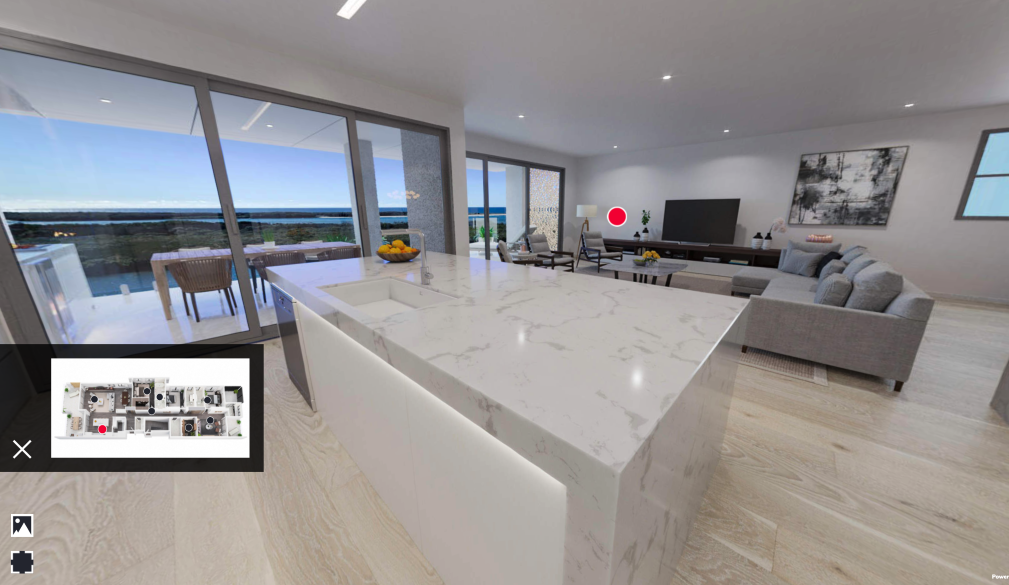
“Our 3D virtual tours enable prospective buyers to walk through a CGI version of your finished product. The buyer can explore all the rooms and view different finishes. A full visual walkthrough gets your buyers emotionally invested and ready to buy ‘off plan’.
“These are not so much re-creations as they are ‘pre-creations’. Using the most advanced 3D animation, our artists can produce a breathtaking photo-realistic interior or exterior rendering of your project.
“BoxBrownie.com’s incredible examples of 3D modelling don’t just show how a project will look, they invite prospective buyers inside for a tour, immersing themselves in the project.
“Once inside, a buyer can experience your project down to the most minute detail. Or, we can showcase different interior styles, creating a precise ‘end result’ experience that buyers love to bask in.
“It doesn’t matter if you are building a shopping centre, an entire housing development, or simply a private residence, BoxBrownie.com’s stunning creations enable your buyer to see and experience the magic of the project from the earliest possible stage.
“Streetscapes, development renders, which can include the bird’s-eye or ‘drone’s view’ perspectives, and 3D elevations are all easy possibilities through BoxBrownie.com.”
Australian Case Study: Nexus Development Group
“The render virtual tour was extremely helpful to showcase our new units to potential interstate and overseas buyers who weren’t able to visit site due to COVID-19 travel restrictions. The virtual tour generated interest and excitement for the project, including attracting a sight-unseen purchase from off-shore,” said Luke Dzufer of Nexus Development Group, who engaged BoxBrownie.com to create render virtual tours for his most recent Botanica Riverside development in Maroochydore Queensland.
US Case Study: Solid Ground Home Builders
“We’re selling circles around the other builders that are on the same street… both in terms of numbers and in dollars per transaction.”
Charles Nitschke, former CMO of the Tomlinson Group of Companies in the USA recently left his position to begin a new venture, marketing homes off-the-plan with his brother Jeff Nitschke. The brothers reported that BoxBrownie.com renders coupled with a virtual tour were actually attracting up to a 730% increase in property views, coupled with a greater than 3000% increase in the amount of expressions of interest on a similar product in a similar street, over a lesser period of time.
Mr Schravemade concluded, “With BoxBrownie.com’s latest digital offering, architectural visualisation has stepped up to a whole new level in the way properties must be marketed in Australia and globally.”


