
Bathroom Design Trends Taking Over Melbourne Homes
Melbourne has never been shy about design. This is a city that argues passionately about laneway cafés, Victorian terraces and whether a flat white is superior to a latte. So it should come as no surprise that bathrooms, once purely functional rooms tucked at the end of a hallway, have become one of the most talked-about spaces in the home.
Walk through any inspection on a Saturday in Brunswick, Hawthorn or the Bayside suburbs and you will see the evidence: moody tiles, curved vanities and freestanding baths that look like sculptures. Homeowners are investing more in these spaces, and many start by looking at real projects, such as a recent Balwyn bathroom renovation, to see what is possible in a typical Melbourne home before committing to their own.
Curves everywhere
Hard edges are giving way to softer forms. Arched mirrors, rounded vanities, curved shower screens and pill-shaped tiles are turning up in bathrooms across the city. The effect is calming and slightly retro, a nod to mid-century design and the Art Deco architecture found in many older Melbourne suburbs.
Curves also have a practical benefit in family bathrooms, where sharp corners and small children are not a happy combination.
Colour is back
For years, the default bathroom was white on white with perhaps a grey floor tile. That era is fading. Melburnians are embracing colour, from earthy terracotta and sage green to deep forest tones and dusky pinks.
Colour can be introduced boldly, with a full tiled wall, or more subtly, through a painted vanity or coloured tapware. Many designers are pairing coloured tiles with natural materials such as timber and stone to keep the look warm rather than overwhelming.
Texture you can feel
Flat, glossy surfaces are being replaced by finishes with more tactile appeal. Fluted glass, ribbed vanity fronts, handmade-look tiles with slight irregularities and honed stone all add depth and interest. Under good lighting, these textures create subtle shadows that change throughout the day, which gives even a small room a sense of depth that plain white tiles never quite manage.
The return of the bath
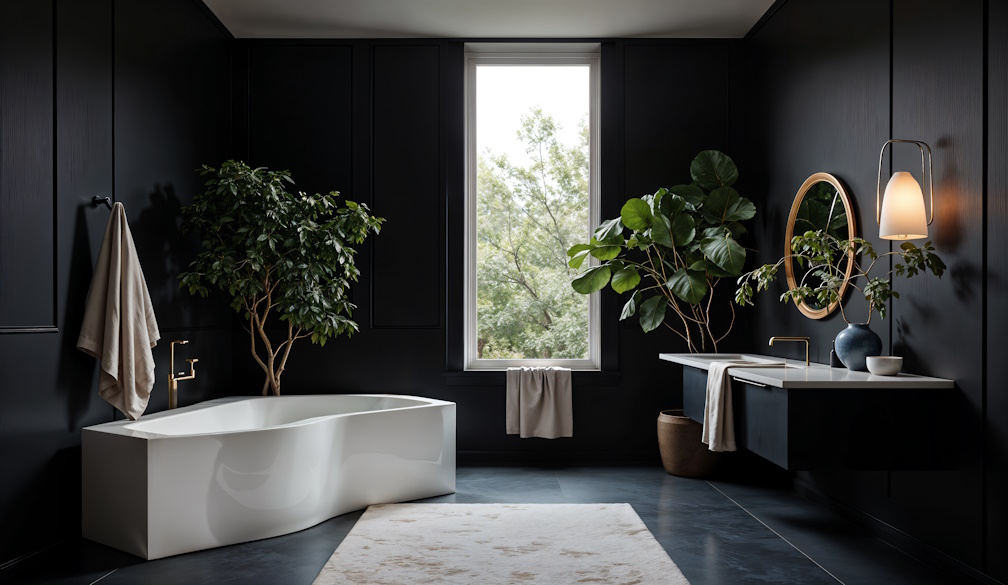
Freestanding baths have become a signature feature in renovations. They are no longer limited to large main bathrooms either. Compact freestanding models allow even modest spaces to include a bath, and many homeowners consider them worth giving up a bit of floor space for.
Placement is part of the appeal. A bath positioned beneath a window or framed by a feature wall becomes the focal point of the room.
Brushed metals and mixed finishes
Chrome is not dead, but it has serious competition. Brushed brass, gunmetal, brushed nickel and matte black tapware are all popular, and designers are increasingly comfortable mixing finishes within the same room. A brushed brass mixer paired with matte black accessories, for instance, can look deliberate and refined rather than mismatched.
Wet rooms and walk-in showers
Open, frameless showers with a single glass panel or no screen at all create a sense of space and are easier to clean. In smaller bathrooms, a fully tiled wet room approach can make the whole space feel larger. Proper waterproofing and floor grading are essential, which is one reason this is a job for experienced professionals.
Storage that disappears
Clutter is the enemy of a calm bathroom. Recessed shaving cabinets, wall niches in showers, wall-hung vanities with deep drawers and hidden storage behind mirrors all help keep benchtops clear. Thoughtful storage planning is often what separates a good renovation from a great one.
Heritage meets modern
Melbourne's housing stock includes plenty of Victorian, Edwardian and inter-war homes. Many renovations aim to respect that heritage while adding modern comfort. Encaustic-style floor tiles, traditional-style tapware and period-appropriate colours can sit happily alongside contemporary fixtures, creating a bathroom that feels connected to the rest of the house.
Planning your own
Trends are useful for inspiration, but the best bathrooms reflect how the people living there actually use them. Think about who uses the room, how much storage is needed, whether a bath will be used regularly and how much maintenance you are willing to do. Look at real completed projects, ask plenty of questions and choose a team with experience in homes similar to yours.
A well-designed bathroom should feel good every single day, not just look good in photos.


