

Where Corten Steel Fits in Architectural and Industrial Projects
Understand weathering steel
Corten is a common name used for weathering steel, a material valued for the protective surface patina that develops under suitable atmospheric conditions. Rather than relying only on a conventional coating, weathering steel forms a stable-looking oxide layer as it is exposed to alternating wet and dry conditions. The appearance can be a reason to specify it for architectural features, screens, landscape elements and selected industrial applications, but the material still needs to be chosen with its environment in mind.
Australian Steel supplies Corten steel plate as part of its plate-stock range. Before specifying it, consider where the material will be installed, how water will drain from the surface and whether the surrounding area can tolerate rust-coloured runoff during the weathering process. The intended appearance, thickness, design details and maintenance expectations should all be discussed early. Weathering steel is not automatically suitable for every outdoor location simply because it is designed to develop a patina.
Assess the exposure conditions
The development and stability of a weathering patina depend on the environment. A location with repeated wetting and drying may behave differently from an area that remains constantly damp or is exposed to aggressive contaminants. Crevices that trap moisture, sheltered areas with little airflow and surfaces where water cannot drain can interfere with the expected weathering process. Coastal, industrial or highly polluted settings may require particular care and technical advice.
When evaluating Corten for a project, consider the microclimate as well as the general region. Look at rain exposure, drainage, nearby materials and whether runoff could stain concrete, stone or painted surfaces. Detail the design so that water does not collect unnecessarily, and consult the project engineer or material specialist where exposure conditions are uncertain. Good planning helps set realistic expectations for both appearance and service performance. For an exterior feature, Corten steel should be specified with drainage and adjacent finishes in mind.
Design for drainage and appearance
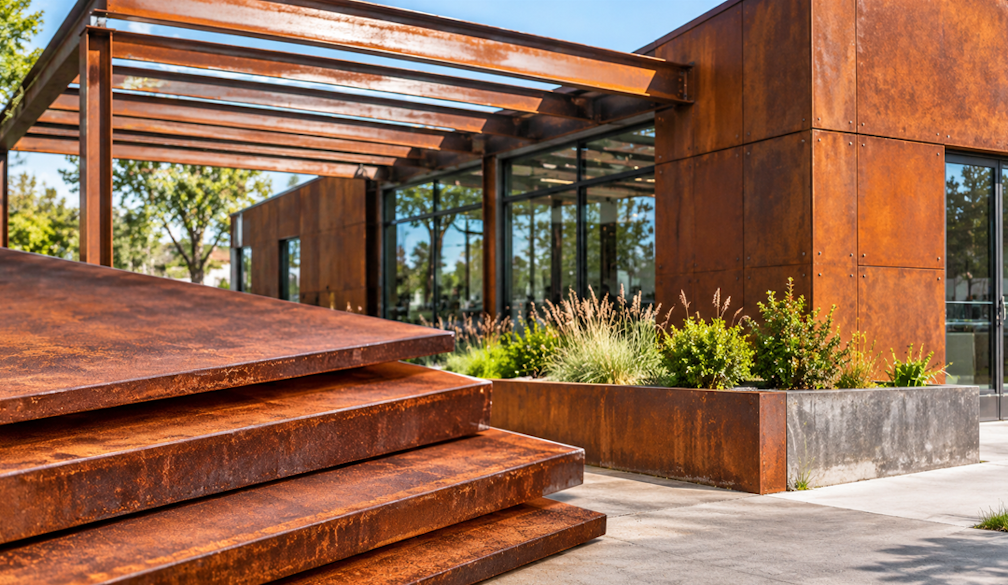
Weathering steel is often selected partly for its evolving colour, which can range from orange-brown to darker rust tones as the surface changes. The final appearance is not identical in every installation. Differences in exposure, orientation, moisture and runoff can create variation across the surface. Designers should account for this natural change rather than expecting a uniform factory finish to remain unchanged after installation.
Drainage details deserve special attention. Water flowing from a Corten steel panel may carry rust-coloured residue during the weathering period. If the material sits above a light-coloured paving surface, façade or entryway, the runoff may leave visible marks. Drip edges, clear drainage paths and appropriate separation from vulnerable finishes can help manage this issue. Mock-ups or sample panels may be useful when the visual outcome is important to the client.
Plan fabrication and installation
Although weathering steel can be used for a variety of profiles and fabricated components, its fabrication requirements should be planned around the design and the specified grade. Plate thickness, dimensions, cut-outs, fixing points and edge treatments all influence the manufacturing process. If the material will be cut to a complex shape, provide clear drawings and discuss the cutting method and any secondary finishing before ordering.
Australian Steel offers plate-processing services that may assist with preparing material for fabrication, depending on the requirements of the job. When ordering Corten steel, confirm the grade, plate thickness, dimensions and any processing requirements. Discuss welding, fastening and installation details with the responsible fabricator or engineer, especially where the component is structural or subject to significant loads. Material selection should support both the desired appearance and the technical demands of the finished assembly. A sample can help stakeholders understand how Corten steel may change as the surface weathers.
Consider maintenance and surrounding materials
Weathering steel is often chosen for its relatively low need for conventional surface painting in suitable environments, but that does not mean it can be ignored after installation. Designers and owners should understand how the patina will develop, whether runoff may affect nearby surfaces and what inspections are appropriate for the application. The surface may continue to change with exposure, and local conditions can affect the rate and consistency of that change.
Consider adjacent materials and interfaces as part of the specification. Fixings, supports, drainage paths and contact with other metals should be reviewed by the project team to avoid unwanted staining or compatibility issues. If a clean, consistent finish is essential from the first day, weathering steel may need a carefully planned presentation strategy or may not be the best choice for that location. Clear expectations help clients understand the difference between a material designed to weather and one intended to retain a coated finish.
Confirm supply and project requirements
Before ordering, prepare the material specification, thickness, plate dimensions, quantity and any processing notes. If the design requires particular documentation or testing, state those requirements in the enquiry. For architectural projects, it may also be helpful to confirm the intended finish, sample expectations and how the material will be stored before installation. Avoid leaving decisions about patina, runoff and drainage until the material has arrived on site.
For projects considering Corten, Australian Steel can discuss the available plate stock and processing options. Confirm that the selected grade is appropriate for the project’s exposure conditions and technical requirements with the relevant designer or engineer. A well-planned specification brings together appearance, drainage, fabrication, installation and maintenance, helping the material perform as expected while delivering the visual character the project calls for.


