

Garage Door Springs in Brisbane: Types, Lifespan, Warning Signs, and Replacement Guide
Your garage door could appear simplistic, as if it were just another type of sliding door; however, this isn't in fact, the case. Your garage door depends on a complicated system of tension and balance, which makes it possible to move your garage door springs. These power coils will lift, support, and open the door using one hand. Once they wear out, your door is rendered inoperable, your car becomes trapped, and your security becomes compromised at home. Garage door springs provide a better understanding of how they function to identify problems early, preventing expensive issues and ensuring safety. This guide provides information on types, lifespan, warning signs, and repair options for springs.
How Garage Door Springs Work
A standard garage door weighs around 150 to 400 pounds, and no opener would be able to open and close it day after day without getting tired. Garage door springs eliminate this problem by storing mechanical energy in the springs as they tighten when winding and then release it when movement occurs. The springs tighten when the door is closed and store energy, like a coiled clock. Upon opening, they relax and give off that energy, counteracting nearly the entire weight of the door. The springs are connected to the door by steel cables and drums, which ensure that the door moves smoothly and safely.
Why Balance Protects Your Opener
A balanced door puts very little strain on the motor and chain. Most of the load is taken up by the springs, and only the opener is pushing against gravity. As springs start to lose strength, the motor has to operate harder, hotter, and often breaks prematurely before the end of its life.
Types of Garage Door Springs
Torsion Springs
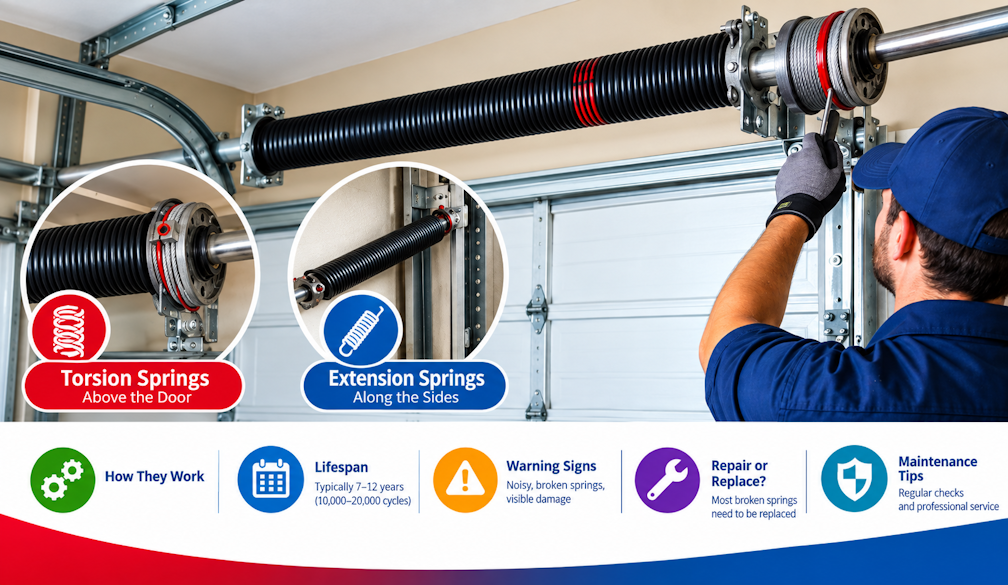
Torsion springs are attached to a metal shaft above the door opening, and the springs twist when the door is closed and untwist when the door is opened. This design is most common in modern homes, as it provides for smoother movement, improved balance, and extended service life. Torsion springs also break in a safer way, as they don't fly across the garage like other springs. This is the one that homeowners with heavy insulated or wooden doors prefer.
Extension Springs
The extension springs are attached along both sides of the door in parallel with the horizontal tracks, and they extend when the door is closing and contract when the door is opening. They are usually installed on lighter doors, as they are less expensive and require minimal installation space. But an extension spring can burst with great force. The broken parts are trapped by a safety cable that runs through the coil; always make sure that your springs have one.
How to Choose the Right Spring
The best fit depends on the door weight and track design, as well as the height of the door. A professional will measure your door and determine the proper wire size, length, and inner diameter. Don't guess, as this puts tension on the cables, drums, and opener.
How Long Do Garage Door Springs Last?
Typical springs can be rated at approximately 10,000 cycles, and each spring cycle is defined as one full open and close of the door. With four uses of the garage per day, your family would have about seven years of life expectancy. High-cycle springs have a life of 20,000 to 50,000 cycles. These are more expensive initially, but they can save money and hassle if the door is frequently opened in a busy household.
Factors That Shorten Spring Life
It's most often heavy daily use, but weather is also a significant concern. Rust begins to form and is caused by humidity and sea air, making the metal weaker and inducing small cracks between the coils. Lubrication is important because it reduces friction, and an imbalance in the door causes the springs to do more work than they were intended to.
Warning Signs of Failing Garage Door Springs
Noise, Jerky Movement, and a Heavy Door
Typically, springs do not dry out without warning. Typically, when loud noises can be detected from the garage, one should suspect a snapped spring; any squeaking or grinding noises are signs of worn-out or dried-out coils. The door may start shaking and moving jerkily, which indicates that the load is not being held properly as it should. You can test it for yourself by pulling the red emergency release cord to unplug the opener, and then lift the door up by hand. A well-balanced door will reach about halfway, whereas a heavy door or a door that dips rapidly has lost some of its spring tension.
Visible Gaps and Damage
Carefully observe the coils. If there is a gap in one of the torsion springs, it is broken and needs to be fixed; rusted or sagging extension springs must be serviced also. If the door does not open but the motor is running, then the motor is likely to be damaged by a broken spring. Don't force the opener, or it will put stress on other components.
Repair or Replace?
It is virtually always a better idea to replace. If the spring is worn, the other is likely to be worn as well; replacing both at the same time keeps the door balanced and saves you another service call.
Why DIY Is Risky
Torsion springs contain a significant amount of energy, and if there is a single slip of the winding bar, the consequences can be fatal, injuring you badly. Parts are easily available in hardware stores, but this process requires specialized tools, specific measurements, and proper training. Hire a licensed garage door repair technician instead of risking your life just to save some money.
What Replacement Costs
The prices are dependent on the type of spring, size of wire, and geographical location. The average price for professional replacement of a standard pair is $150 to $350, and high-cycle replacements and heavy doors will be higher. Request a written estimate of parts, labor, and warranties before work is done.
Simple Maintenance Tips
Consistent upkeep prolongs the life of springs and helps avoid unexpected malfunctions. Apply silicone or lithium garage door lubricant on the springs at least twice per year and refrain from using thick grease in order to keep dust and dirt away. Examine the springs, cables, and pulleys for rust, loose parts, and broken threads every few months. Arrange for an expert tune-up of the garage door and springs annually, especially if your door is older than five years.
Conclusion
Garage door springs operate silently on a daily basis, but they take on the hardest type of work in the entire garage door system. Being familiar with the difference between torsion and extension garage door springs can allow you to make the correct decision. It is important to be aware of some warning signs and symptoms of spring failure. Always make sure to reach out to a certified technician in the event of garage door spring failure.


