

How Landscaping and the Right Turf Can Transform Property Value and Lifestyle
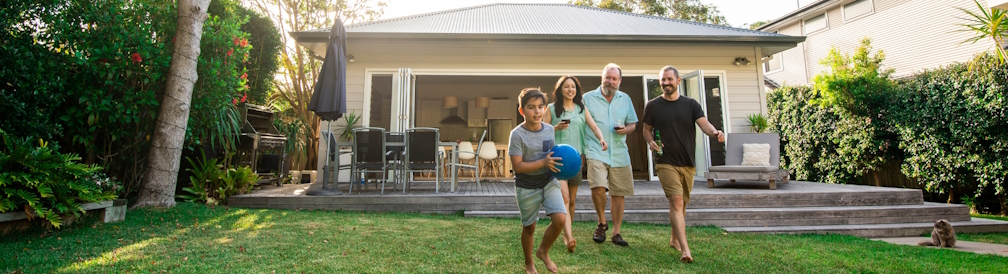
Over the past decade, the definition of the Australian home has undergone a fundamental shift. No longer viewed simply as a patch of grass framed by a boundary fence, the backyard has evolved into a fully realised outdoor living room—an extension of the interior footprint designed for dining, entertaining, relaxation, and wellness.
Whether you are looking to maximise your property's resale valuation in a competitive real estate market or simply wish to cultivate a private sanctuary for your family, landscaping melbourne and thoughtful landscape design pay massive dividends. However, creating an outdoor space that balances aesthetics, durability, and practical maintenance requires more than just dropping in a few pot plants and an outdoor table.
It demands a holistic strategy that seamlessly blends hardscaping, architectural planting, and high-performance living turf.
The Modern Australian Backyard: Blending Form and Function
The modern home design landscape heavily prioritises indoor-outdoor flow. Bi-fold glass doors, continuous floor surfaces, and flush alfresco thresholds mean that your outdoor area is constantly on display from within the home. When designed well, this continuous line of sight expands perceived interior square footage and floods living areas with natural light.
To achieve harmony, landscape architects and property designers focus on balancing two primary elements: hardscaping and softscaping.
- Hardscaping forms the structural framework of your outdoor area. This includes paved patios, natural stone retaining walls, timber decks, pergolas designed by professional pergola builders, and built-in outdoor kitchens. While these hard elements provide functionality and structural zones, too much hardscaping can make a property feel stark, hot, and industrial.
- Softscaping brings life, colour, and temperature control to the property. Greenery absorbs heat, softens structural lines, provides acoustic dampening against street noise, and generates an immediate psychological feeling of calm.
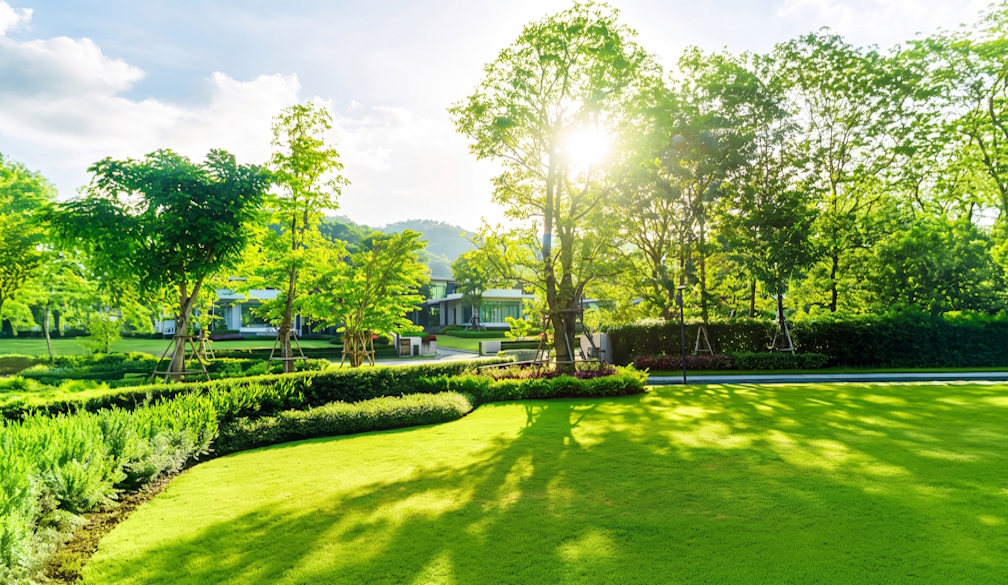
At the centre of every memorable softscape is a healthy, vibrant lawn. A lush green lawn acts as the visual anchor of the garden—a natural frame that connects stone pathways, timber decking, and garden beds into one cohesive design story.
Choosing the Right Turf Variety for Your Microclimate
One of the most frequent mistakes homeowners make when upgrading their landscaping is treating grass as a generic commodity. In reality, different turf species possess vastly different biological traits, sun requirements, water demands, and wear capabilities. Selecting a variety that matches your property’s specific microclimate—taking into account tree canopy shade, soil structure, and family usage—is essential for long-term success.
|
Turf Type |
Shade Tolerance |
Wear & Recovery |
Best For |
|
Soft-Leaf Buffalo |
High (up to 70%) |
High durability with a soft feel |
Families, pets, shaded gardens |
|
Zoysia (e.g. Australis) |
Medium–High (up to 75%) |
Excellent durability and self-repair |
Low-maintenance lawns, premium landscapes |
|
TifTuf Bermuda / Couch |
Moderate (up to 50%) |
Exceptional recovery from heavy wear |
Full sun, sports areas, active backyards |
|
Kikuyu |
Low (up to 25%) |
Fast growth and rapid recovery |
High-traffic areas, budget-conscious homeowners |
Soft-Leaf Buffalo Grasses
Broad-leafed, deep green, and exceptionally soft underfoot, premium soft-leaf Buffalo varieties (such as Matilda and Sir Walter) are among the most popular choices for Australian residential homes. Their broad leaf blades capture sunlight efficiently, making them outstanding performers in yards with partial shade from boundary fences or mature trees. They are gentle on children's skin, highly pet-tolerant, and maintain impressive winter colour.
Zoysia Grasses
If you are aiming for a refined, modern architectural aesthetic with minimal ongoing mowing effort, Zoysia varieties (like Zoysia Australis or Sir Grange) are exceptional choices. Featuring a lush, carpet-like texture, Zoysia grows slower vertically than traditional grasses, meaning less time spent behind the lawnmower. It also boasts remarkable heat tolerance and deep root systems that withstand hot Australian summers.
Bermuda & Couch Grasses
For sun-drenched properties that host frequent back-yard sports, heavy foot traffic, or energetic dogs, fine-leaf Bermuda and Couch varieties provide unmatched resilience. Hybrid Bermudas like TifTuf require significantly less water once established and bounce back quickly from heavy wear and tear.
Sourcing Direct From Local Specialists
Regardless of the species you select, the single most critical factor in lawn establishment is the quality and freshness of the rolls when delivered. Sourcing directly from specialist growers such as A View Turf ensures that your turf is freshly harvested to order, free of weeds, and acclimatised to local soil and environmental conditions. Farm-fresh turf cut with a rich layer of organic soil establishes roots rapidly, minimising shock and ensuring your new lawn takes hold cleanly during the crucial first fortnight.
3. Ground Preparation: The Unsung Hero of a Perfect Lawn
Even the highest grade of turf will struggle if installed over compacted, nutrient-starved dirt. Skimping on soil preparation is the root cause of patchy growth, poor drainage, and premature lawn decline.
If you are undertaking a DIY installation or managing a landscape project, following a structured ground-preparation sequence ensures a smooth, level, and long-lasting result:
- Clear and Strip Existing Vegetation: Remove all existing weeds, old turf, rocks, and debris. If stubborn weeds are present, treat the area two weeks before soil works to ensure root systems are thoroughly eradicated.
- Assess and Adjust Drainage: Ensure the subgrade slopes gently away from your home’s foundation (a minimum 1–2% gradient). This prevents waterlogging against brick walls or paved outdoor entertaining areas during heavy rainfall.
- Incorporate Quality Turf Underlay: Spread a 100mm layer of high-quality organic turf underlay—typically a balanced blend of 80% washed river sand and 20% rich organic compost. Sand provides crucial sub-surface drainage and soil aeration, while organic matter holds moisture and supplies initial nutrients.
- Level and Tamp: Rake the soil smooth, lightly roll or tamp it down to settle air pockets, and ensure the final soil level sits approximately 25mm below your adjacent pavers or timber edging. This guarantees that once the turf rolls are laid, the grass surface aligns flush with the surrounding hardscape.
- Apply Starter Fertiliser: Before rolling out the grass, apply a starter fertiliser containing moisture-retaining crystals and phosphorus to accelerate root development.
4. Maximising Kerb Appeal and Resale Value
In real estate, first impressions set the psychological baseline for prospective buyers. Professional real estate agents consistently note that a property's "kerb appeal"—its streetfront presentation—can add significant perceived value to a residential listing.
A pristine front lawn paired with defined architectural landscaping signals to buyers that the home has been meticulously cared for throughout. To maximise visual impact:
- Define Crisp Edges: Use steel, timber, or concrete curbing to create sharp, deliberate boundaries between your turf, garden beds, and driveway.
- Incorporate Layered Planting: Contrast the vivid green of your lawn with dark organic mulches (such as black fine bark or forest mulch) and native structural plants like Lomandra, Anigozanthos (Kangaroo Paw), and structural Agave.
- Illuminate Key Features:
- Install low-voltage LED garden lighting along pathways and uplight feature trees. Integrated lighting extends the usability of your outdoor space well into the evening hours while dramatically enhancing evening kerb appeal.
5. Smart, Water-Efficient Maintenance Strategies
Achieving a luxury lawn doesn't mean you have to spend every weekend glued to a garden hose or lawnmower. Modern lawn care emphasises efficiency, working with nature rather than against it.
Deep, Infrequent Watering
Rather than shallow daily sprinklings—which encourage weak, surface-level roots—water your lawn deeply 1 to 2 times per week during warm periods. Deep soaking forces grass roots to drill deeper into the soil profile in search of moisture, making the turf significantly more drought-resistant and resilient against intense summer heat.
The One-Third Mowing Rule
Never remove more than one-third of the grass blade in a single mowing session. Scalping the lawn exposes the soil to direct sunlight, accelerating moisture loss and giving airborne weed seeds the ideal opportunity to germinate. Keeping your lawn slightly higher during peak summer acts as a natural shade blanket for the soil beneath.
Seasonal Aeration and Feeding
Over time, soil naturally compacts from foot traffic, rainwater, and mower weight. Aerating your lawn once a year in spring using a core aerator allows oxygen, water, and fertilisers to penetrate deep into the root zone. Couple this with a balanced, slow-release granular fertiliser in early spring and autumn to maintain rich leaf colour and vigorous root growth year-round.
Transforming Your Outdoor Living Experience
Investments made in your residential landscape yield ongoing rewards. Beyond the clear financial uplift in property appraisal and kerb appeal, a thoughtfully designed outdoor sanctuary offers an invaluable space to unplug, entertain guests, and enjoy the outdoor Australian lifestyle.
By pairing quality architectural hardscaping with high-grade, locally grown grass from established specialists, you create a seamless outdoor environment that looks stunning, performs under pressure, and stands the test of time.
Frequently Asked Questions (FAQ)
Q: How much value does professional landscaping add to a home?
A: Professional landscaping and a well-maintained lawn can increase a property’s total market value by 5% to 15%. Beyond financial appreciation, high kerb appeal speeds up sale times by creating a strong, positive first impression for prospective buyers.
Q: When is the best time of year to lay new turf in Australia?
A: Spring and early autumn are the ideal seasons to lay new turf. During these periods, mild temperatures reduce heat stress on new roots while providing sufficient soil warmth and sunshine to promote rapid root establishment before extreme summer heat or winter cold sets in.
Q: How long does it take for new turf to establish roots?
A: New turf generally takes 10 to 14 days to establish initial feeder roots, provided it is watered thoroughly daily. You can test establishment by gently tugging on a corner of a turf roll—if you feel resistance, the roots are taking hold. Full deep-root establishment typically takes 4 to 6 weeks.
Q: How do I choose between Soft-Leaf Buffalo and Zoysia turf?
A: Choose Soft-Leaf Buffalo if your yard has partial shade (trees, high fences), high pet traffic, or if you prefer a broad, soft leaf texture underfoot. Choose Zoysia if your property gets full sun to moderate shade, you want lower mowing maintenance, and you prefer a fine, plush carpet appearance.
Q: How soon after laying new turf can I mow it for the first time?
A: You should wait approximately 2 to 3 weeks before the first mow. Always check that the turf has rooted firmly into the soil base before mowing, set your mower deck to the highest setting, and ensure you never cut off more than one-third of the leaf blade at a time.


