

Driveway Design Ideas: How to Plan a Driveway That Boosts Street Appeal
First impressions count, and your driveway is often the first thing people notice about your home. A cracked, uneven or poorly planned driveway can make even a beautiful house look tired from the street.
A well-designed driveway, on the other hand, adds kerb appeal, improves everyday convenience and ties the front of the property together.
Whether you're building new, renovating or finally replacing that old concrete slab, talking to a driveway draftsman early can help you plan a driveway that looks great and works properly on your site.
Why Driveway Design Deserves More Thought
A driveway might seem simple, but there's more to it than pouring concrete. Gradients, drainage, turning space, trees, footpaths and council requirements all play a role.
This is especially true in Sydney, where many homes sit on sloping blocks, narrow lots or busy streets. A driveway that's too steep or poorly drained can scrape cars, collect water or become a hazard in wet weather.
7 Driveway Design Ideas and Tips
1. Choose a Material That Suits Your Home
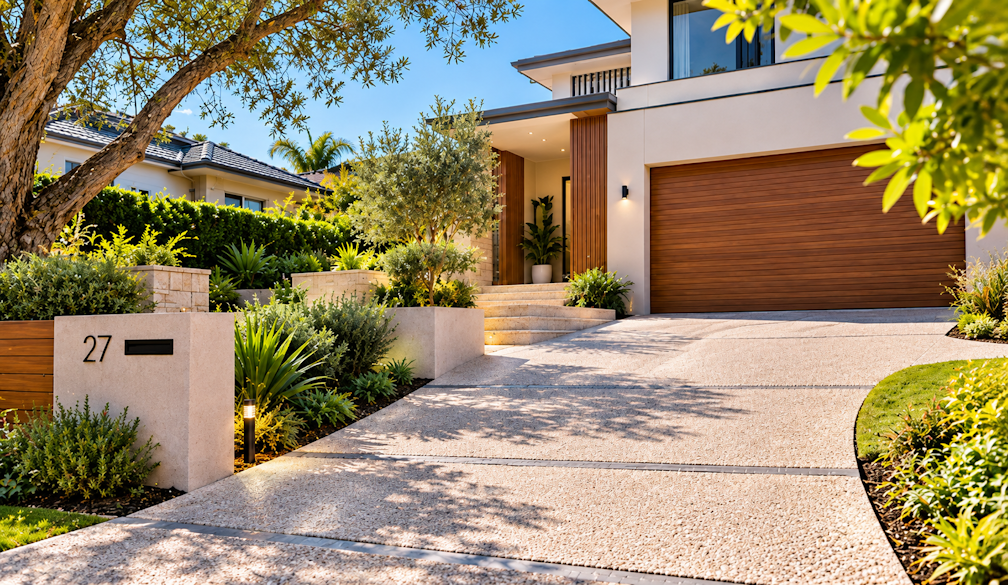
Your driveway should complement the style of your house. Popular options include:
- Plain concrete: practical, durable and budget-friendly
- Exposed aggregate: textured, attractive and good for grip
- Pavers: flexible designs and easy to repair in sections
- Stencilled or coloured concrete: adds pattern and personality
- Natural stone: a premium look for prestige homes
Consider durability, maintenance, slip resistance and how well each option suits your climate and street.
2. Get the Gradient Right
Steep driveways are common across Sydney, from the Northern Beaches to the Hills District. If the slope is too sharp or changes suddenly, cars can scrape at the top or bottom.
Good design considers transitions between the street, footpath and garage to keep the driveway safe and comfortable to use.
3. Plan for Drainage
Water needs to be directed away from your home, garage and neighbouring properties. Poor drainage can cause pooling, erosion or water entering the garage during heavy rain.
Grated drains, falls in the surface and permeable materials are all options that can help manage stormwater.
4. Allow Enough Space for Vehicles
Think about how many cars you'll park, whether you need room for a boat or trailer, and how easily vehicles can turn around. A little extra width can make daily life much easier, especially for families with multiple cars.
5. Soften It With Landscaping
Garden beds, edging and low planting can help a driveway blend into the front yard rather than dominate it. Grass strips or permeable pavers are another way to add softness and reduce hard surfaces.
If there are established trees nearby, check whether they're protected before planning any work around their roots.
6. Add Lighting
Low-level lighting along the edges of the driveway looks great at night and improves safety. It also makes it easier to see steps, edges and changes in level after dark.
7. Think Ahead to Future Needs
If you're planning an electric vehicle, a carport or a new garage down the track, factor it into the design now. Running conduit for future power or planning space for a carport is far easier before the driveway is poured.
Do You Need Council Approval for a Driveway?
In many Sydney council areas, work that affects the public footpath, kerb or road, such as a new or widened driveway crossing, usually requires council approval. Councils may also have specific requirements for the design and construction of this section.
Depending on the project, other approvals may apply for work on your property, particularly if it involves retaining walls, tree removal or changes to site levels. Requirements vary between councils, so it's always worth checking before you start.
How Professional Drafting Helps
Professional drawings set out the driveway's layout, levels, gradients and drainage in detail. They help builders and concreters understand exactly what's required and can support any applications to council.
Accurate plans also reduce the risk of costly mistakes, such as a driveway that's too steep, drains in the wrong direction or doesn't meet council requirements.
Planning Other Outdoor Structures
Driveways are often part of a larger outdoor upgrade. You might also be considering a carport, garage, retaining wall, pergola or new front fence.
Working with an experienced outdoor building drafter means these elements can be designed together, so the front of your property looks cohesive and each structure works with the others.
Final Thoughts
A great driveway is more than a place to park the car. With the right materials, careful attention to gradients and drainage, and a bit of landscaping, it can improve both the look and function of your home.
Planning properly from the start helps avoid problems, keeps council happy and gives your home the street appeal it deserves.


