


Precision and efficiency connected with hydro excavation
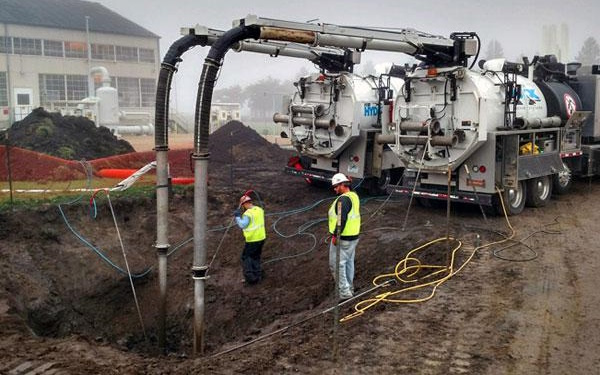
Hydro excavation is referred to as the procedure involving the elimination or displacement pertaining to soil through the utilization of pressurized water, followed by the utilization of an air conveyance or vacuum system for the transportation of soil or debris into the tank reserved for collecting debris. This process would be offering non-destructive and highly precise approach towards soil excavation, while aiding at accurate identification regarding the underground utilities.
The origins of hydro excavation's widespread usage could be traced back to its adoption on the part of the oil and gas industries inside Canada. The contractors were quick in connection with the recognition of exceptional efficiency demonstrated of the method in comparison to other approaches used for soil excavation
This could be witnessed, especially in regions having cold weather conditions, wherein the traditionally employed excavation techniques were difficult to implement because of the frozen soil.
Uncovering strength of hydro excavation apparatus
Hydro excavation based machinery integrates the pressurized water on top of an air vacuum system, in order to perform the soil excavation work efficiently, as used by powervac group. This activity involves the use of highly pressurized water, as part of the under discussion scene of hydro excavation activity, with the goal to cut as well as disintegrate the soil. As far as loading the relevant systems with vacuum based source, the scientists have two primary options: the fan system and the positive displacement blower.
The fan system excels at moving large volumes of air, making it finely appropriate for the excavation operations. It is associated with ease of control in addition to operation, is comparatively lighter, and tends to be more cost-effective, compared to the positive displacement blower.
Examining give & take, between depth & speed
In contradiction, the positive displacement blower is equipped with the power to move air over comparatively long distances, hence facilitating the excavations at greater depths. However, this comes at a cost with respect to a slower excavation rate. For most applications, the fan system stands out to be the really effective selection owing to its capability for handling tasks with efficiency, in addition to speed. Hydro excavation linked applications: Underground facilities and subsurface utilities, are generally required with regard to construction activities. Excavation is considered a hardworking job and has a lot of risks attached to it.
The use of hydro excavation has significantly reduced these risks and, therefore, it could be used for numerous applications of excavation. The excavation work is used in connection with the elements of line, the sign in addition to pole installation as well as location. It is further used for potholing or daylighting. It facilitates less congestion and traffic inside the excavation area because the equipment could be placed at some distance. Rehabilitation of sewer and pipe is regarded as another application connected with hydro excavation. This method minimizes the uncertainties in connection with damage or punctures, regarding the pipes.
Impact of hydro excavation upon landscaping & repairs
This removes the additional element of time as well as cost, that the repairs require. By the use of hydro excavation regarding landscaping, accurate excavation gets done, thus, the surrounding soil remains undisturbed. The soil stays compact shaped and strong, while the required removal and associated tasks, are completed.
In hydro excavation the necessity, comprising the underground facilities, in addition to the subsurface utilities, is considered a routine occurrence with respect to the construction projects. Excavating the ground, in order to install these utilities, is deemed to be a complicated job that is fraught with risks. The advent of hydro excavation has highly mitigated these stated hazards, making it a versatile methodology for multiple excavation applications.


